Overview
The Curtin Coastal Ecology Group (CCEG) investigates how coastal ecosystems respond to environmental change across ecological and evolutionary timescales. Our research integrates field ecology, population genomics, remote sensing/geomatics, and experimental approaches to understand the processes that govern the resilience, adaptation, and collapse of marine foundation species, with a particular emphasis on seaweed ecosystems and other coastal habitats.
Research Themes
How do climate extremes shape coastal habitats?
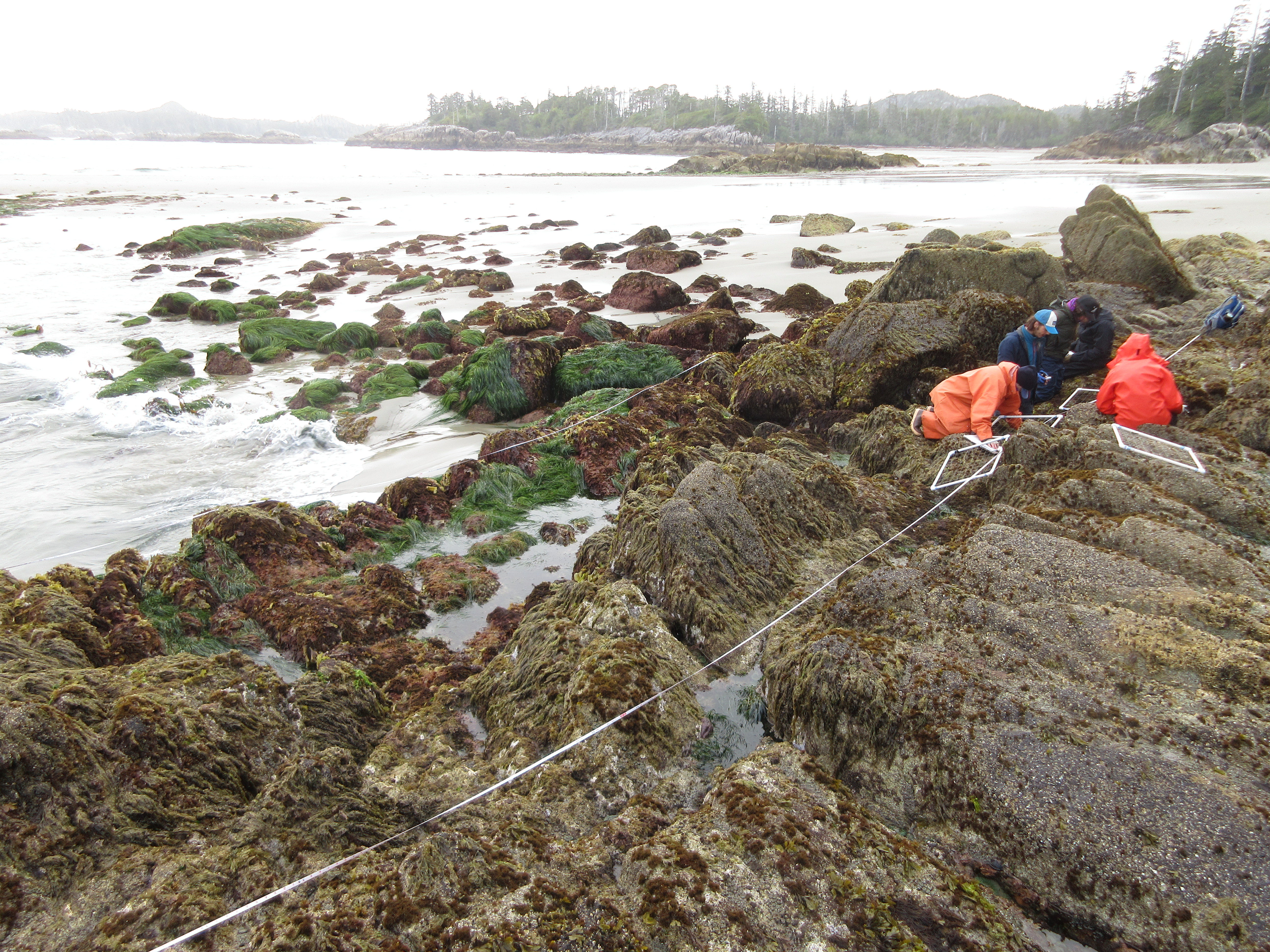
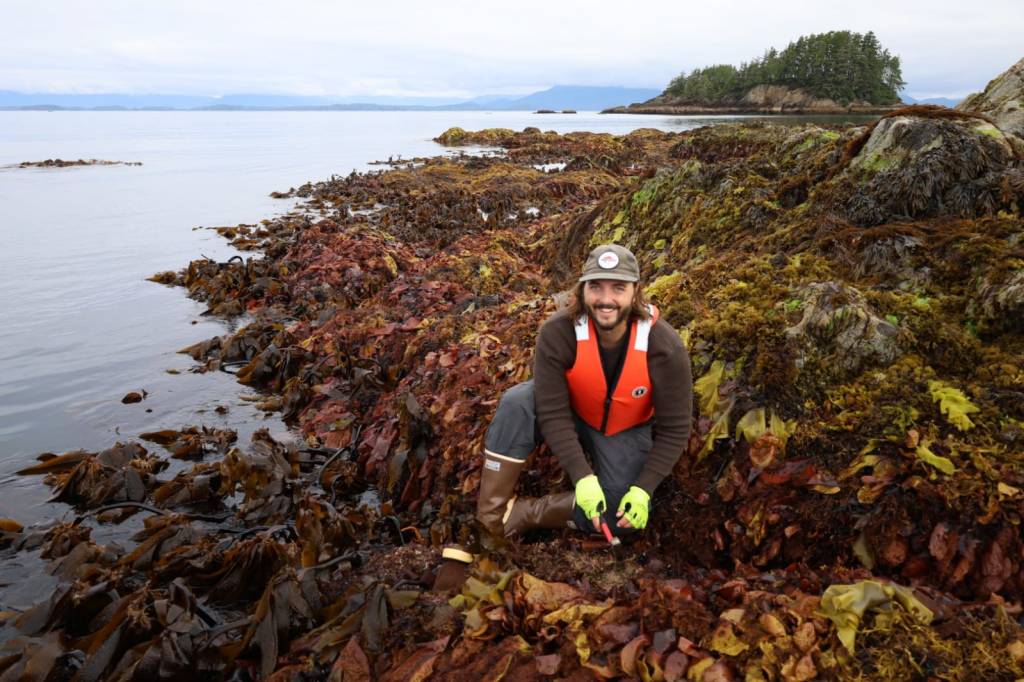
A central focus of the group is understanding how marine habitats respond to climate extremes, particularly marine heatwaves, ocean warming, and interacting environmental stressors. Much of this work has been driven by field-based investigations of kelp forest decline and persistence across natural environmental gradients. Sam’s research was the first to document climate-related losses of kelp forests in Western Canada, revealing the disappearance of both intertidal and subtidal kelp communities from temperature “hotspots” in southern British Columbia through the integration of historical records, field observations, and satellite data (Starko et al. 2019 PLOS One, Starko et al. 2022 Ecological Applications, Starko et al. 2024 Marine Ecology Progress Series). These efforts demonstrated that local water temperature, current speeds, and regional variation in trophic dynamics strongly mediate kelp forest resilience, with some regions showing severe declines while others remain stable or are increasing depending on local conditions. This research directly contributed to the establishment of the Kelp Rescue Initiative at Bamfield Marine Sciences Centre, where Sam serves as a Project Advisor.
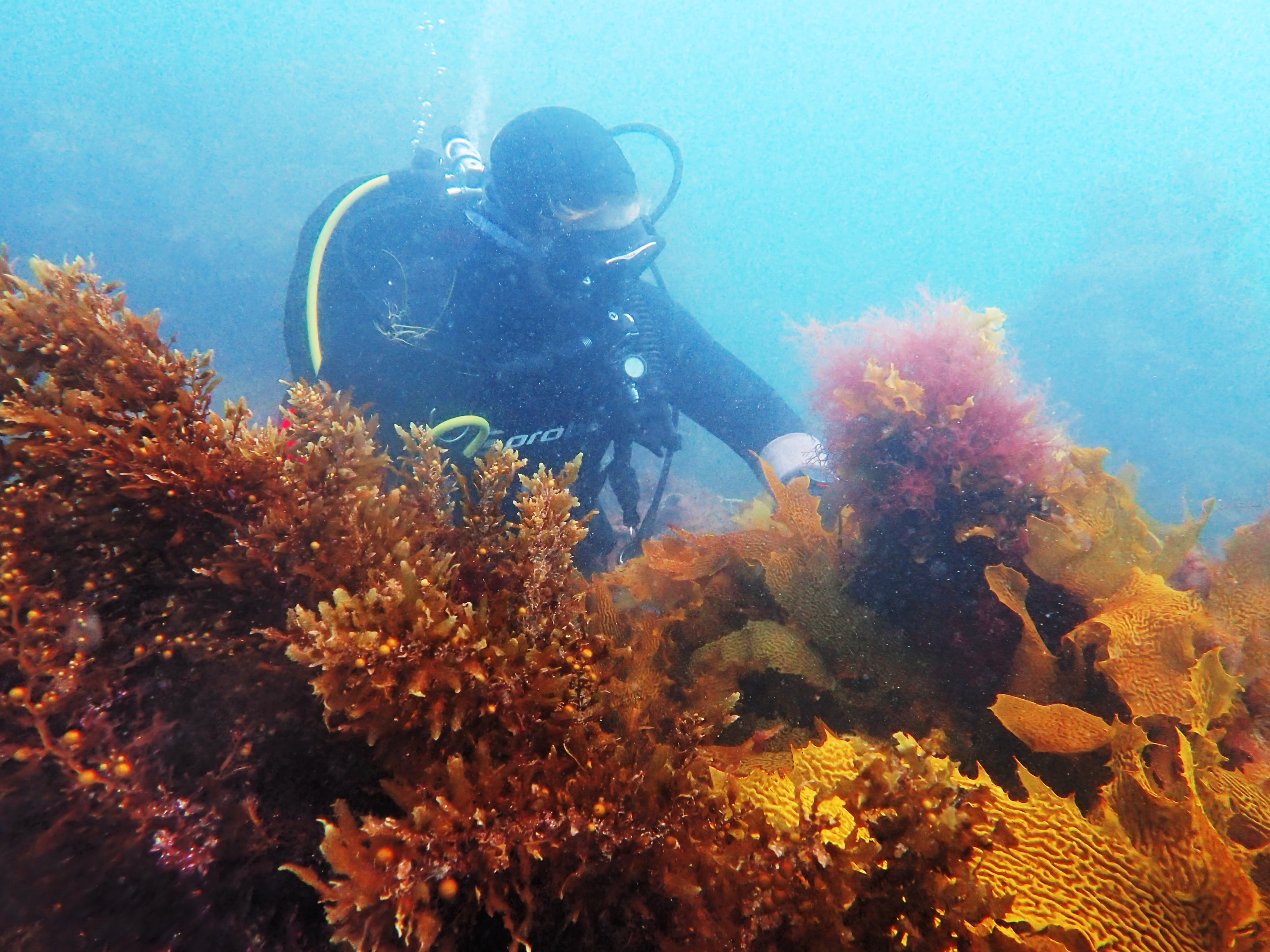
Current and emerging projects in Western Australia examine patterns of local adaptation in dominant kelp species across strong thermal and oceanographic gradients, including work on the genetic and physiological mechanisms that underpin tolerance to warm conditions and rapid environmental change. This includes large-scale genomic analyses of kelp populations distributed across thousands of kilometres of coastline, combined with field measurements of growth, tissue condition, and thermal stress. Parallel work focuses on how recent and ongoing marine heatwaves have impacted kelp performance, population dynamics, and ecosystem structure across multiple regions of WA, including the identification of populations that show exceptional resistance or recovery following extreme warming events. Much of this work is currently in analysis or preparation for publication, but already provides a unique and unprecedented dataset for understanding climate resilience in one of the world’s most rapidly warming marine systems.
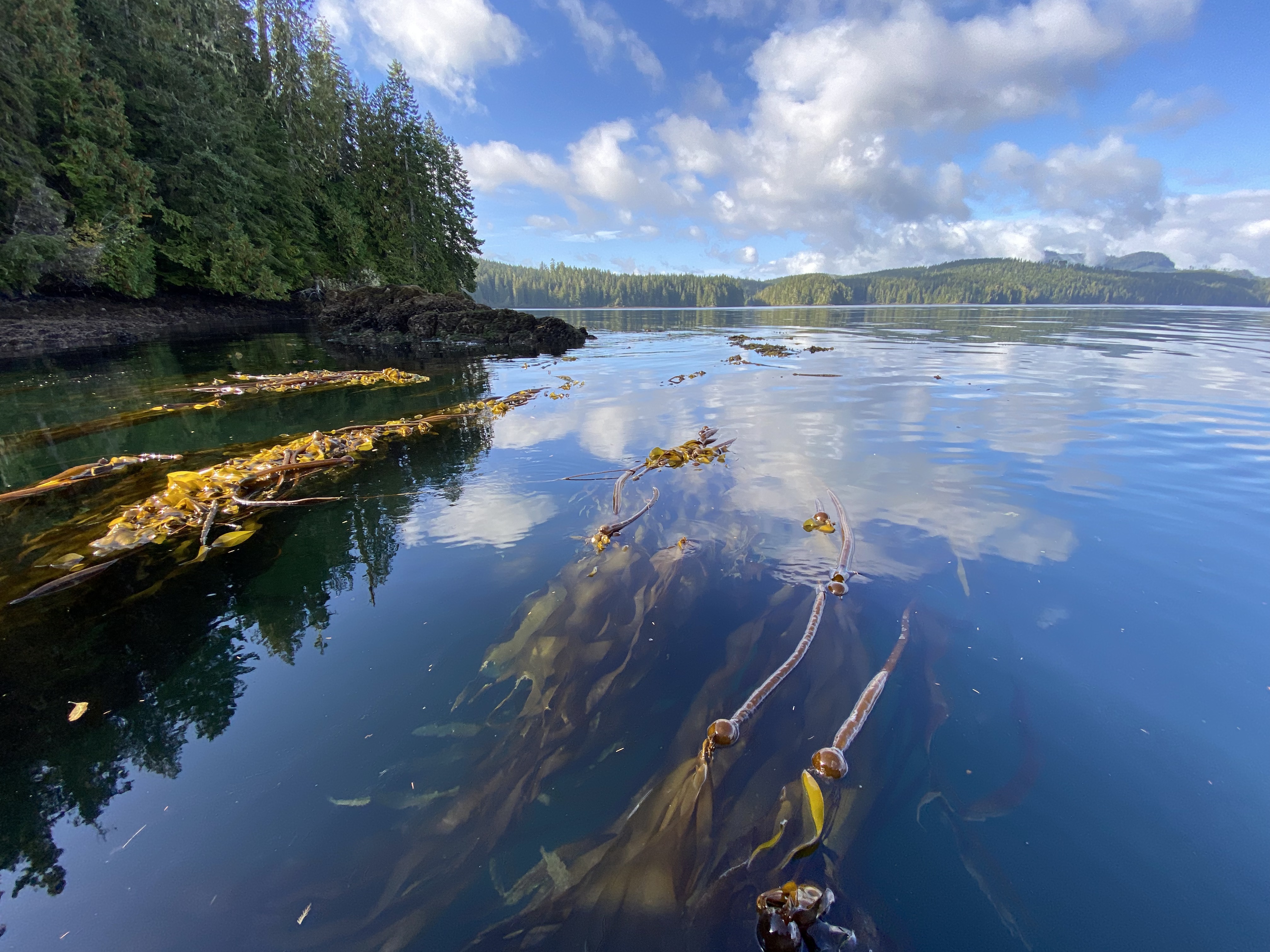
We also engage in large-scale syntheses on the ecological impacts of marine heatwaves and climate change, integrating data and insights from across regions, taxa, and disciplines to identify general principles that govern ecosystem responses to extreme climatic events. This includes comprehensive reviews of the impacts of marine heatwave in nature, analyses of how local environmental context modifies biological responses to extreme temperatures, and the development of conceptual frameworks for forecasting ecosystem vulnerability and recovery under future climate scenarios. Together, these synthesis efforts connect place-based field studies with global patterns, providing a unifying perspective on how marine ecosystems cope with rapid environmental change.
Using molecular tools to understand ecological change
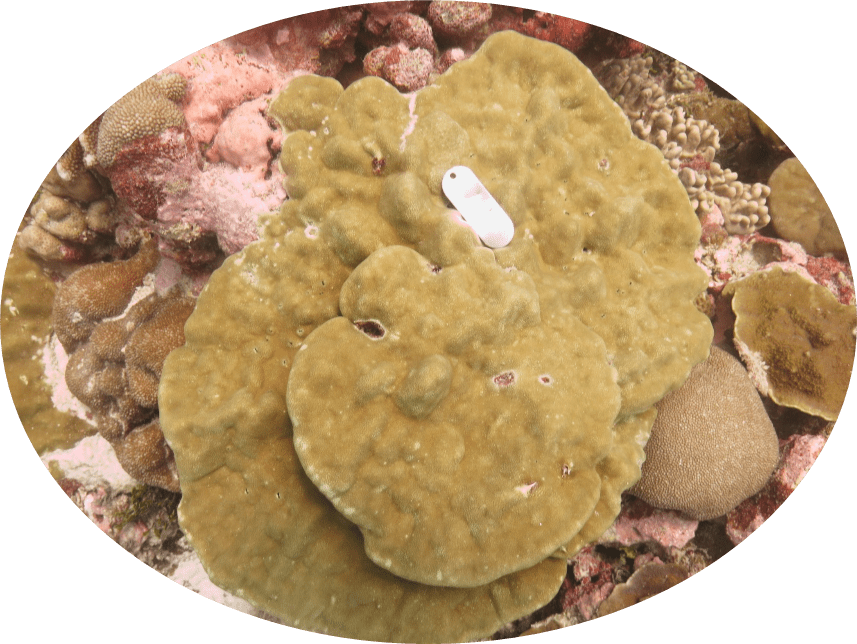
Sam’s research program, and now CCEG’s core activity, uses genetic and genomic tools to understand how marine species adapt to changing environments across a range of spatial and temporal scales, from population genomics to molecular phylogenetics to functional genomics. A major component of this work involves identifying cryptic biodiversity and determining whether such diversity is ecologically meaningful under global change. Using genome-scale sequencing of a common reef-building coral, Sam led research demonstrating that genetic structure strongly underpinned colony survival through a major marine heatwave. Related work on coralline algae showed that kelp forests support more diverse coralline communities than adjacent urchin barrens, highlighting how trait and niche differentiation among cryptic lineages can shape ecological outcomes.
Recent projects extend these approaches to large-scale population genomics of kelp species across local and continental gradients. These include analyses of hundreds of whole genomes from giant and bull kelp populations spanning the west coast of North America, and a continent-scale genomic study of the southern sea palm kelp Eisenia arborea from Baja California to British Columbia to test for local adaptation and inform future experimental work.
In Western Australia, complementary genomic and functional studies now being developed focus on the dominant habitat-forming kelps and fucoids, including Ecklonia radiata and the endemic genus Cystophora. Sam is a co-Chief Investigator on an active Australian Research Council (ARC) Discovery Project examining local adaptation and gene expression in Ecklonia radiata across strong environmental gradients in WA. This work is integrated with new population genomic, phylogenomic, and biogeographic studies of Cystophora to resolve evolutionary relationships, identify drivers of population structure and local adaptation, and quantify how environmental gradients shape genetic and phenotypic variation across the Australian coastline. These efforts are further supported by the development of Sargassaceae-specific environmental DNA (eDNA) approaches to enable large-scale biodiversity monitoring and early detection of population change and species invasion alongside applied research in restoration ecology aimed at enhancing recovery of these ecologically critical, yet increasingly vulnerable, endemic marine forests. Together, this integrated program provides a mechanistic framework linking genotype, phenotype, environment, and management in one of the world’s most distinctive and climate-exposed marine ecosystems.
Protection, restoration and ecosystem services
We work at the intersection of research and practical conservation, focusing on protecting and rebuilding marine ecosystems threatened by climate change. Through this work, we are committed to developing science-based solutions that help protect and restore these vital marine ecosystems for future generations.
Sam has worked closely with government scientists to identify major threats to kelp forests in the Salish Sea ecosystem, a unique system on the border of Canada and the USA. He has also contributed to research evaluating the effectiveness of marine protected areas for kelp forest conservation and understanding how multiple stressors impact coral reef diversity.
 coastalecology.org