Dr. Sam Starko
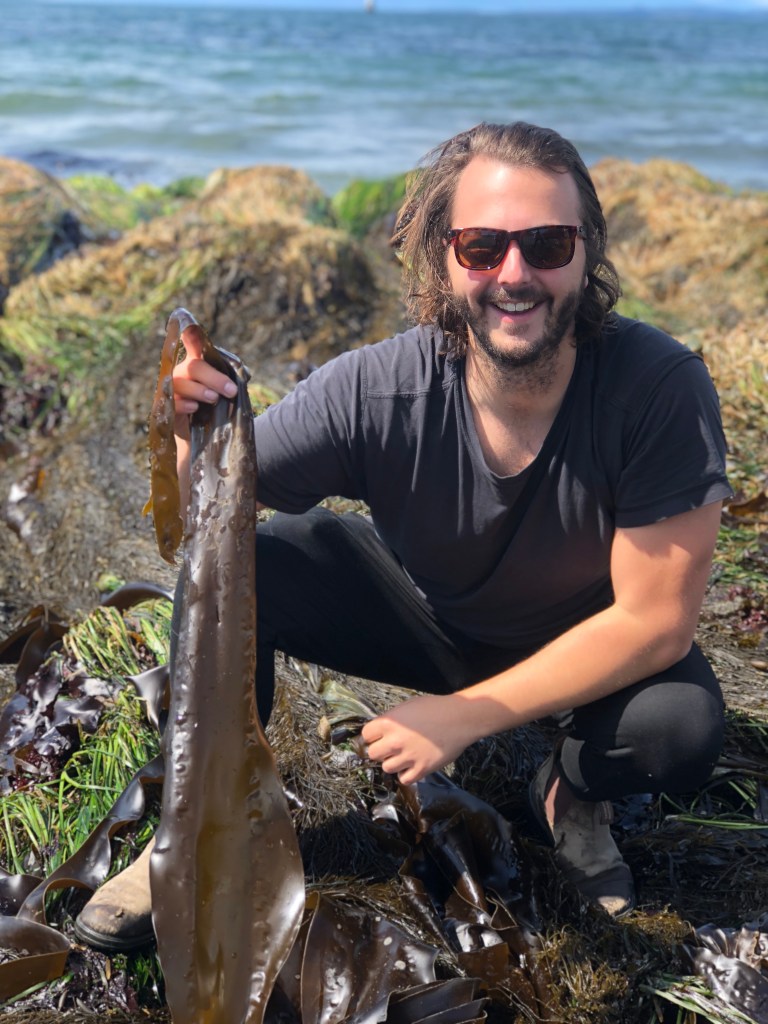
Sam is a Senior Lecturer in Marine Ecology @ Curtin University. He leads the CCEG and is interested in how coastal marine habitats, such as kelp forests and coral reefs, interact with the environment and how the environment can influence interactions between species. Broadly, his work combines molecular techniques and field ecology to better understand how environment-organism interactions can influence processes important to ecology, evolution and conservation. In recent years, Sam’s research has focused predominantly on how environmental change, and especially marine heatwaves, are impacting nearshore ecosystems.
Sam completed his PhD in 2019 from the Department of Botany and Beaty Biodiversity Research Centre at The University of British Columbia in Vancouver. At UBC, hw was a Killam Scholar and studied the evolutionary ecology of rocky shore seaweeds. Following this, he was an NSERC and Mitacs Fellow at the University of Victoria, working in partnership with the Kelp Rescue Initiative and the Pacific Salmon Foundation. He maintains an advisory role with the Kelp Rescue Initiative.
Students
Stelio Georgiou – Hons. (Curtin) – eDNA monitoring of seaweed forests
Stelio’s Honours research aims to investigate how eDNA can be used to detect and identify Cystophora, a group of large brown seaweeds that provide important habitat for marine life on temperate Australasian reefs. Their distribution is declining along the southwestern coast of Australia, and monitoring them is important for maintaining healthy oceanic ecosystems. By comparing different genetic markers and DNA primers, he aims to develop reliable molecular tools for monitoring Cystophora and related seaweed species. This research will help improve our ability to track the distribution of these important habitat-forming algae and support future conservation and management efforts under the rapidly changing climate.
Ciara Norman – Hons. (Curtin) – Impacts of temperature on herbivory
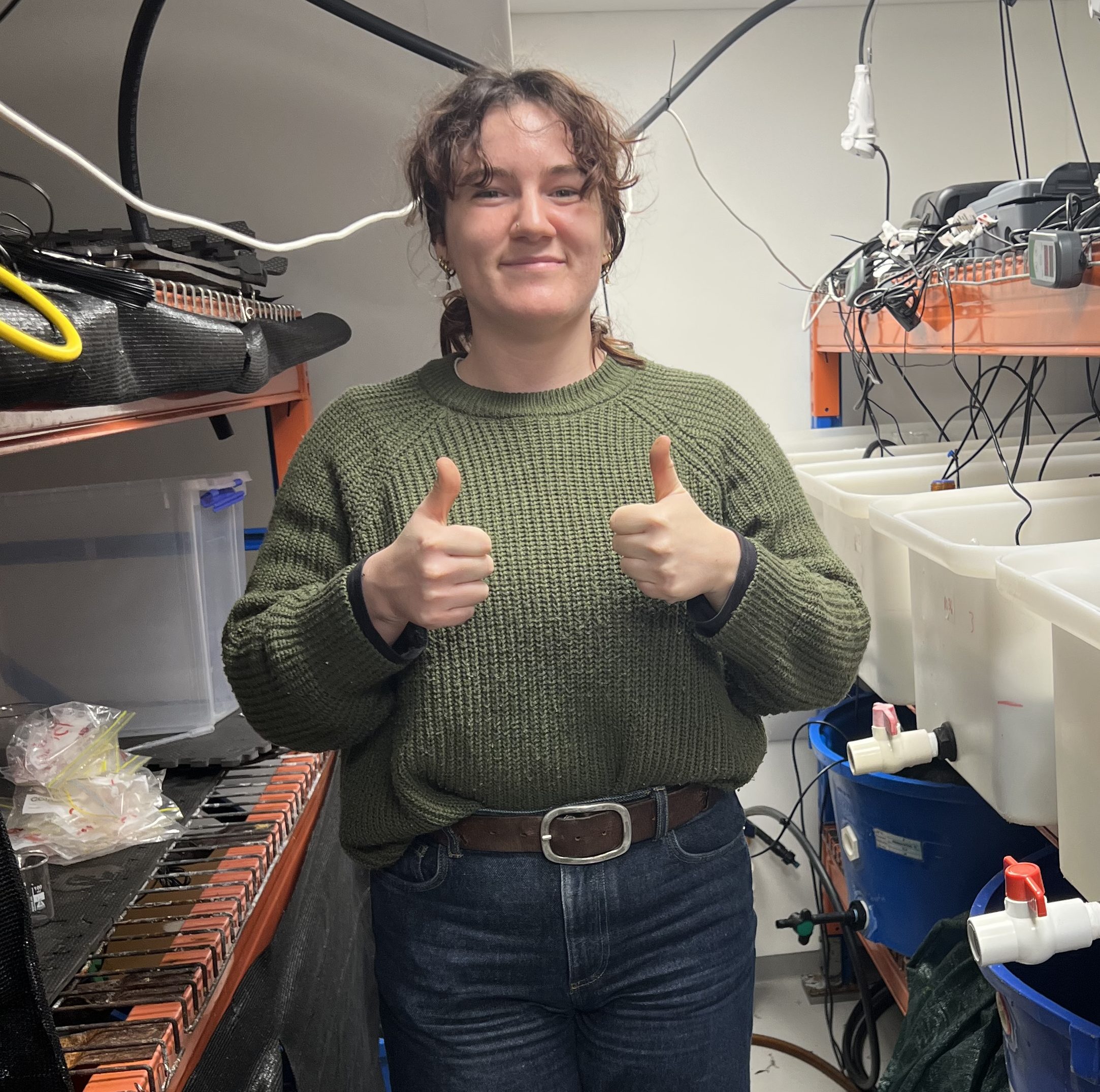
Ciara’s Honours research aims to understand how ocean temperature influences rates of grazing by the gastropod Lunella torquata. By combining controlled laboratory experiments with feeding preference trials, the project investigates how warming may alter herbivore–seaweed interactions with implications for the resilience and functioning of temperate reef ecosystems under climate change.
.
.
Orrin Mackay – MPhil (Curtin) – incoming Sept, 2026
Troy Matthews – MPhil (Curtin) – Shark Depredation [Primary supervisor: Ben Saunders (Fish Ecology Lab)]
We are recruiting!
The CCEG is currently seeking motivated Honours and HDR students interested in coastal and marine ecology, climate change biology, and the ecology and genomics of marine foundation species. Projects span ecosystem resilience, population connectivity and adaptation, ecosystem responses to marine heatwaves, and coastal restoration science, with opportunities for extensive fieldwork, molecular and genomic analysis, and interdisciplinary collaboration. Applicants with backgrounds in marine biology, ecology, environmental science, or related disciplines are encouraged to enquire.

